The Safe Harbor Family Resource Library
Free Resources for Life’s
Unexpected Moments
Whether you’re preparing for your family’s future, helping aging parents, or navigating the loss of someone you love, having the right information can make difficult situations easier. Explore our free guides and checklists, and find a practical place to begin.
Five free publications. Support for different moments in family life.
Navigate the loss of a loved one
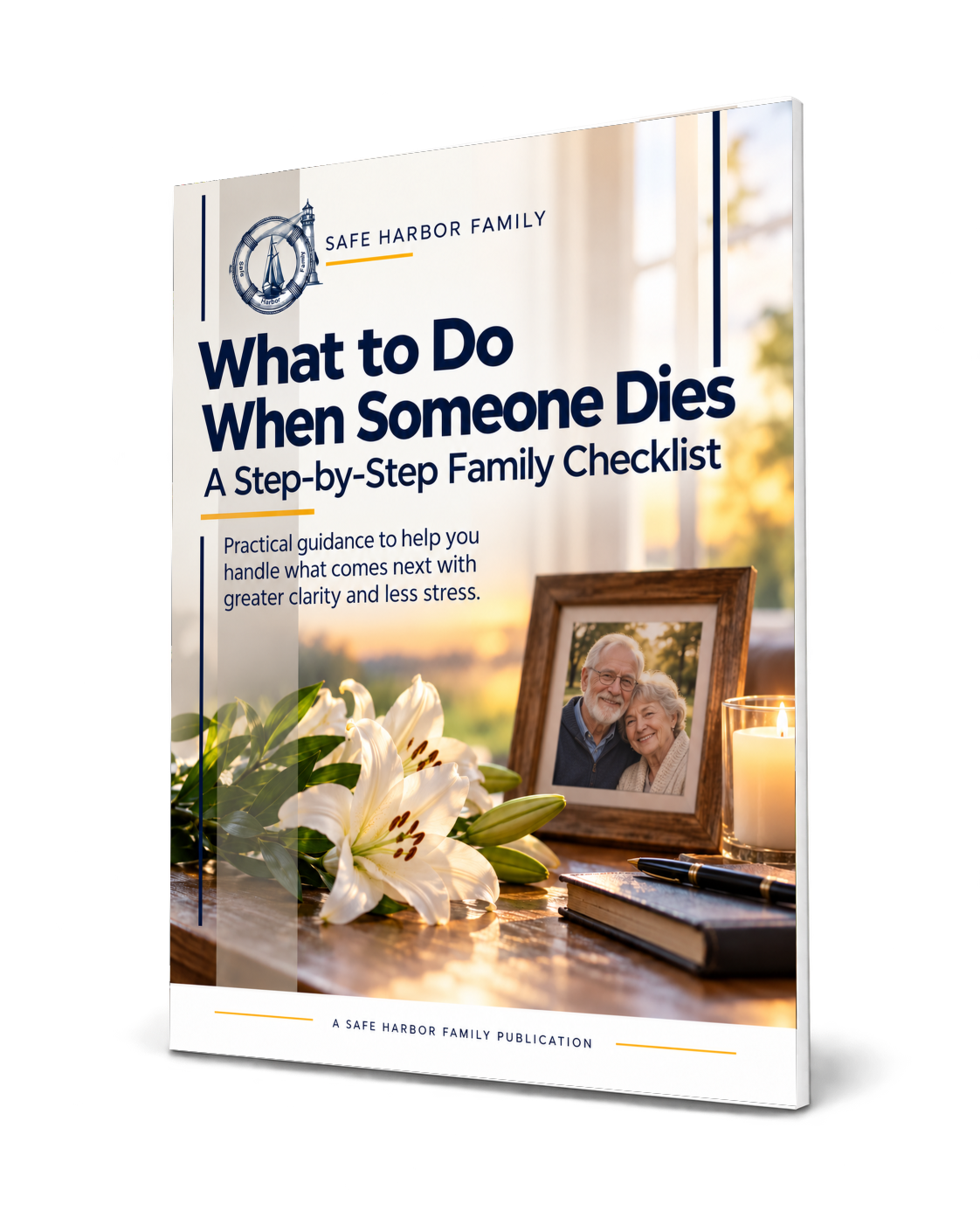
What to Do When Someone Dies
A Step-by-Step Family Checklist
When someone you love dies, start with what needs attention today.
There can be many responsibilities to handle while you are grieving. You do not need to work through them all at once—or remember every detail on your own.
This checklist organizes immediate steps, important notifications, documents, financial and estate matters, and later follow-up into a practical sequence. Tracking space helps you keep unfinished tasks in one place.
- See what needs attention now and what comes later
- Prepare for important calls and administrative tasks
- Track outstanding responsibilities and follow-up
Free PDF · Delivered by email · Read at your own pace
Prepare for the people who depend on you
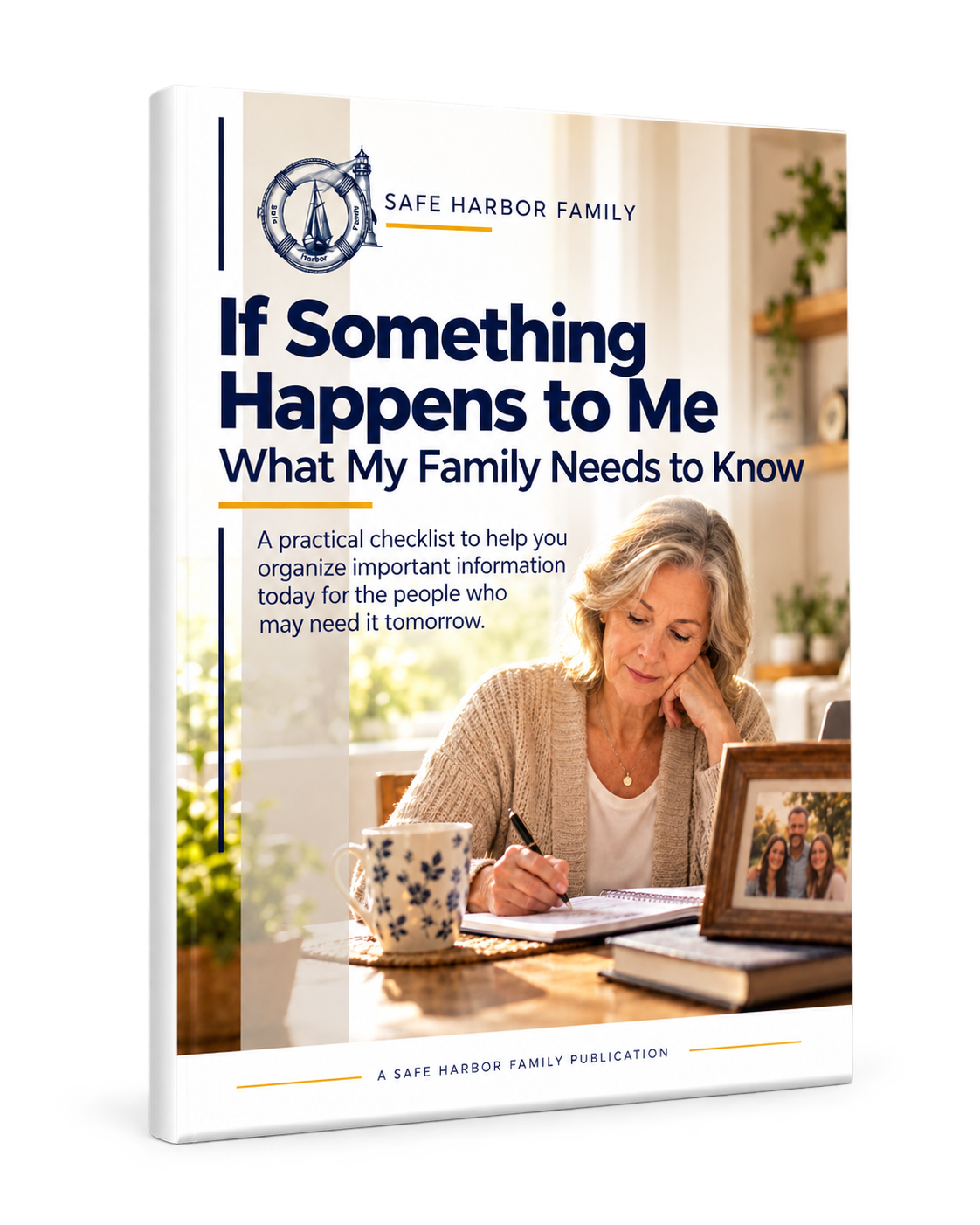
If Something Happens to Me
What My Family Needs to Know · A Family Readiness Checklist
If something happened to you tomorrow, what would your family wish they had asked you today?
You may not be the only person who pays the bills, schedules appointments, or handles household responsibilities. But there are things you know that others in your family may not.
Perhaps it’s an important contact, a financial arrangement, a family responsibility, where something is kept, or simply how a particular task gets done. And while someone else may know some of those things, what you know can fill gaps in what they don’t know.
If Something Happens to Me helps you identify the information and everyday knowledge you possess that could be important to those you love.
It’s a practical way to begin preparing today so your family isn’t left searching for answers when they may need them most.
- Recognize important things you know that others may not.
- Identify information that could fill gaps in your family’s knowledge.
- Begin preparing what your loved ones may need if you become unavailable.
Free PDF · Delivered by email · Read at your own pace
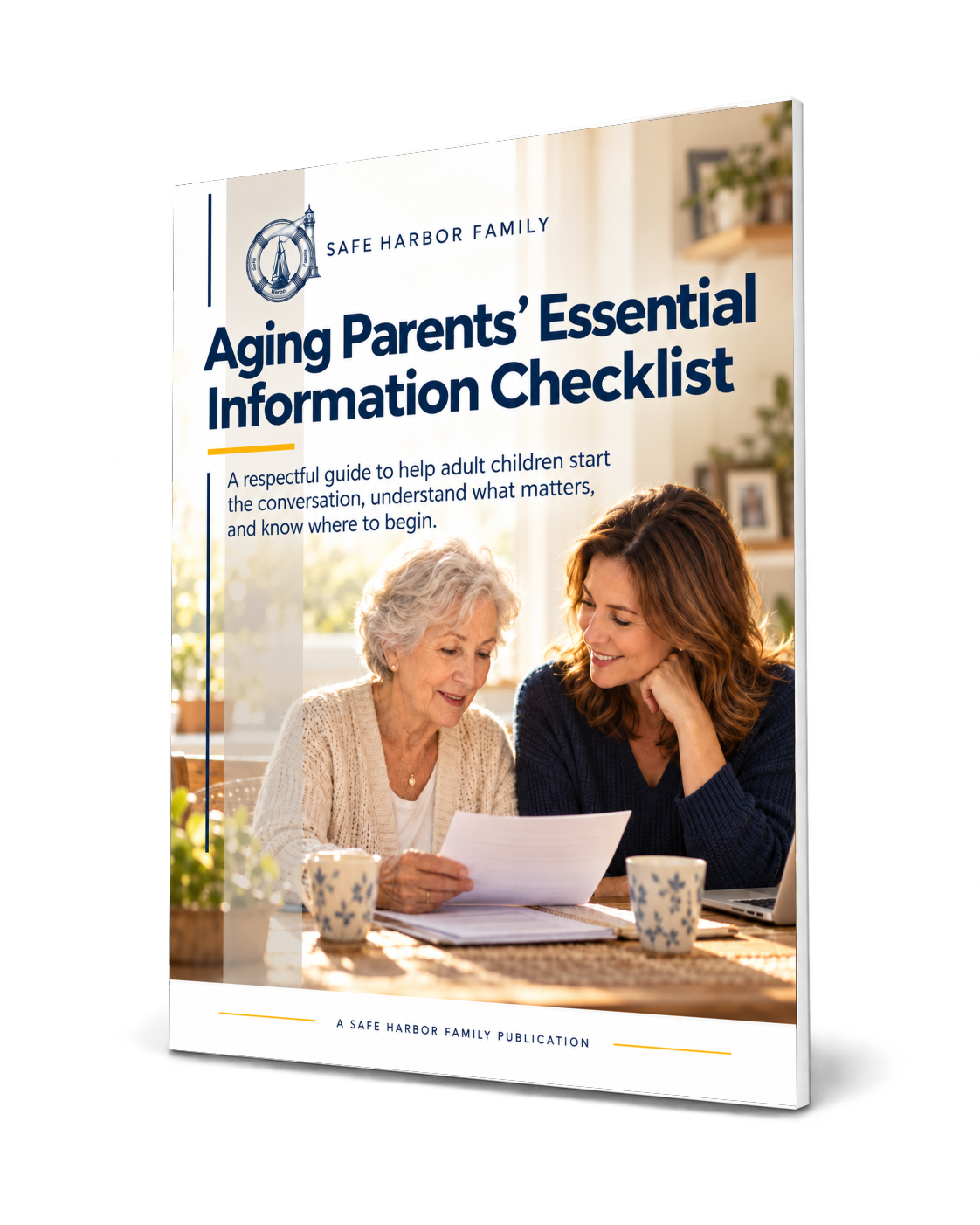
Plan alongside your parents
Aging Parents’ Essential Information Checklist
What Adult Children Should Know Before an Emergency
You want to help your parents prepare. But how do you begin the conversation?
Wanting to help can come with difficult questions: What should you ask? What feels too personal? How can you prepare while respecting your parents’ independence and choices?
This checklist offers a respectful way to begin. Explore essential medical information, legal arrangements, finances, daily responsibilities, care preferences, and emergency contacts together, at your parents’ pace.
- Begin a conversation based on trust and consent
- Identify important information and nearby helpers
- Agree on practical next steps without taking over
Free PDF · Delivered by email · Read at your own pace
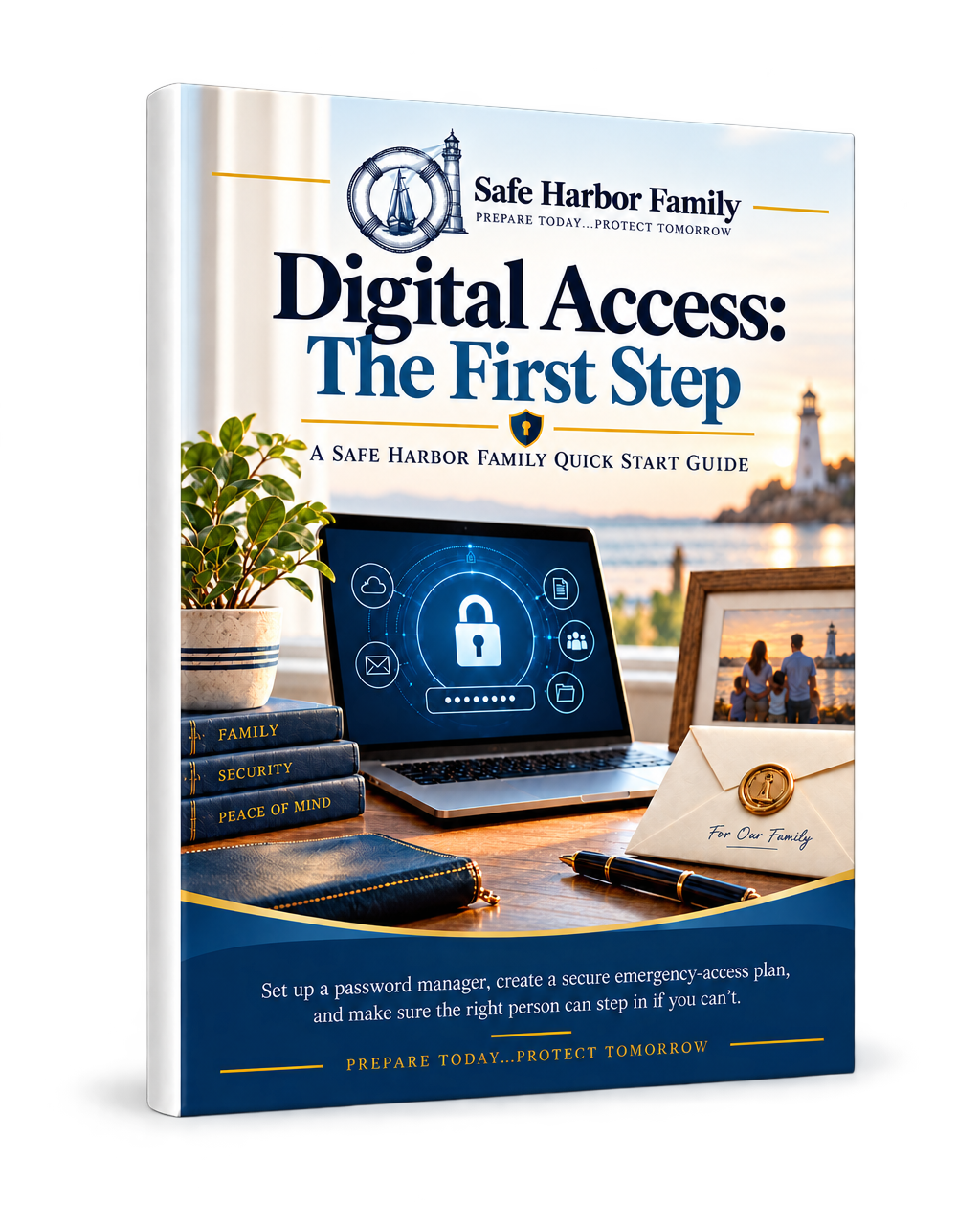
Prepare your digital access
Digital Access: The First Step
A Safe Harbor Family Quick Start Guide
If you couldn’t sign in, would someone you trust know where to begin?
Important parts of everyday life now sit behind a sign-in screen. Preparing for someone to help starts with a secure plan for the access they may need.
This practical quick-start guide helps you set up a password manager, organize emergency digital access, and prepare a trusted person to step in when needed.
- Get started with a password manager
- Organize a secure emergency-access plan
- Prepare a trusted person to help when needed
Free PDF · Delivered by email · Read at your own pace
One useful step at a time
You don’t have to organize everything today.
Start with the resource that speaks to your situation. A conversation, a clearer list, or one important document located can be a meaningful next step.
These resources provide general U.S. educational information. They do not replace professional legal, financial, tax, or medical guidance.
Back to the resources